How to Get Married in Pennsylvania: A Step-by-Step Guide
August 24, 2023
Natalia Baqueiro
How to apply for a marriage licenses in PA
Planning your wedding, elopement, or intimate ceremony in Pennsylvania? One of the first things you’ll need is your marriage license.
Whether you’re planning a traditional wedding, a self-uniting ceremony, or a courthouse celebration in Pittsburgh, this guide walks you through everything you need to know about getting married in Pennsylvania.
From obtaining your marriage license to understanding self-uniting ceremonies, here’s exactly how the process works.
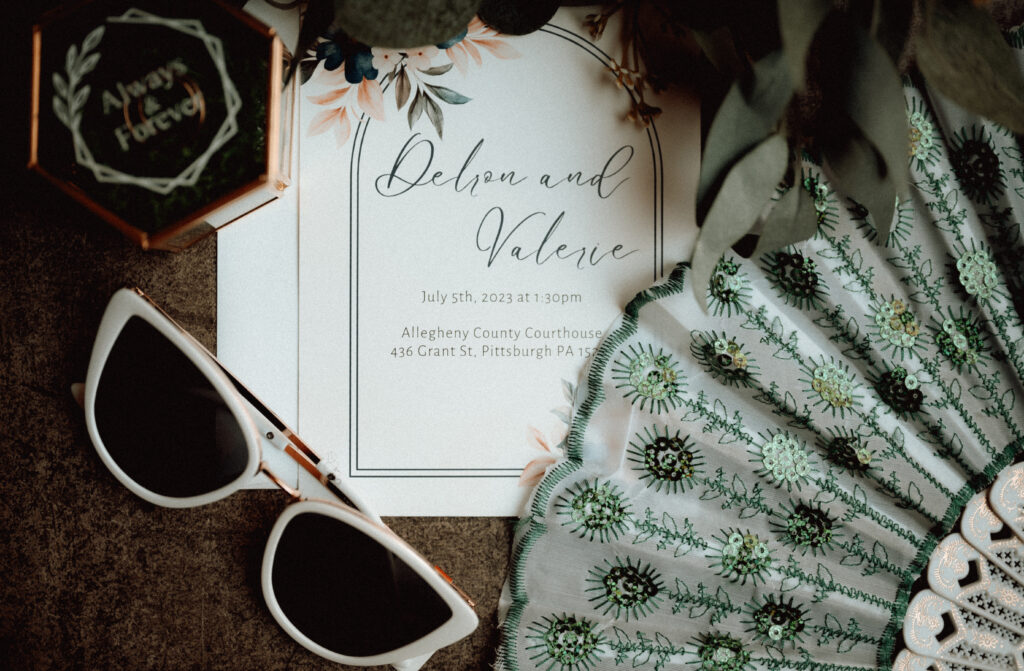
If you’re in Pittsburgh’s Allegheny county, you can apply online by filling out this form. Make sure you have a valid e-mail address and to apply in the in the same county where you plan to marry.
Step 1: Apply for a Pennsylvania Marriage License
Couples may apply for a marriage license in any Pennsylvania county. The license can then be used anywhere within the Commonwealth.
Many counties now offer online applications or virtual interviews, while others still require an in-person appointment.
If you’re planning to marry in Pittsburgh, you can apply through Allegheny County.
Be sure to:
Apply at least several weeks before your wedding date.
Bring a valid government-issued ID.
Have your Social Security number available.
Schedule your appointment in advance if required.
Step 2: Understand the Waiting Period
Pennsylvania requires a three-day waiting period after your license is issued.
This means:
- Your license becomes valid three days after issuance.
- The license remains valid for 60 days.
- You cannot legally marry until the waiting period has passed.
For this reason, most couples obtain their marriage license two to four weeks before their wedding.
What Do You Need to Obtain a Marriage License?
To apply for a Pennsylvania marriage license, you must:
- Be at least 18 years old.
- Present a valid government-issued ID.
- Provide your Social Security number.
- Pay the applicable county fee.
If you have previously been married, you must also provide:
- A divorce decree, or
- A death certificate if your previous spouse is deceased.
Marriage license fees vary slightly by county.
Do You Need Witnesses?
For a traditional Pennsylvania marriage license, witnesses are generally not required.
Your officiant signs the license and is responsible for returning it to the county after the ceremony.
This means couples planning an intimate wedding or elopement may legally marry with only their officiant present.
What Is a Self-Uniting Marriage License?
Pennsylvania is one of the few states that allows couples to marry without an officiant through a self-uniting marriage license.
With a self-uniting license:
- The couple performs their own ceremony.
- Two witnesses sign the license.
- No officiant is legally required.
- The couple returns the completed license to the county.
This option is especially popular among couples planning intimate weddings, elopements, and courthouse celebrations.
You do not need to be Quaker or belong to any religion to request a self-uniting license.
The History of Self-Uniting Marriages
Pennsylvania’s self-uniting marriage laws stem from the state’s Quaker roots.
Quakers believe marriage is a commitment made directly between two people rather than one performed by clergy.
Because of Pennsylvania’s history and commitment to religious freedom, these licenses remain available today for couples of any faith or no faith at all.
Can Non-Residents Obtain a Self-Uniting License?
Yes.
Couples traveling to Pennsylvania for an elopement or intimate wedding may also request a self-uniting license, depending on county requirements.
This makes Pennsylvania a popular destination for couples who want a personal and meaningful ceremony without an officiant.
How to Get Married at the Allegheny County Courthouse
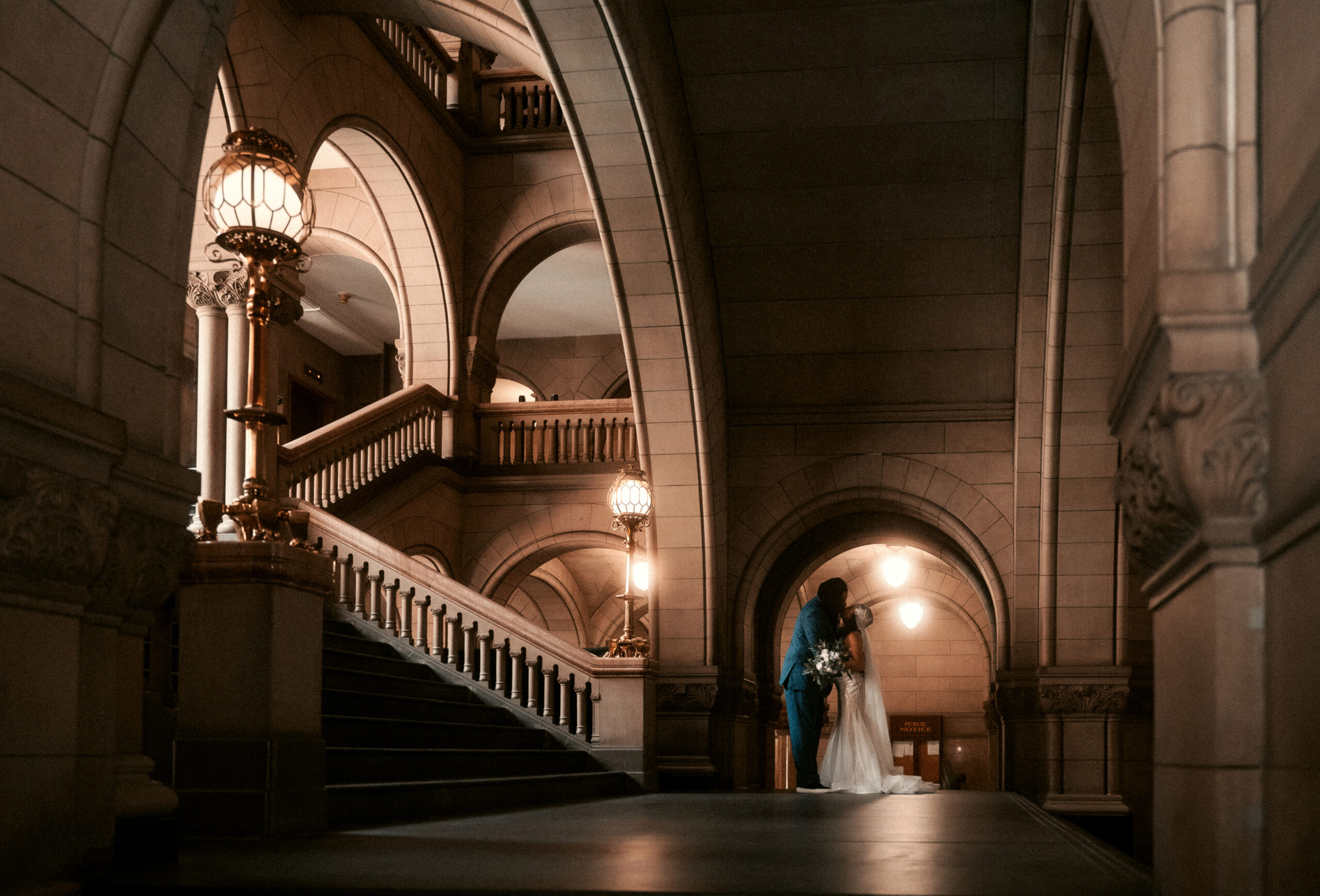
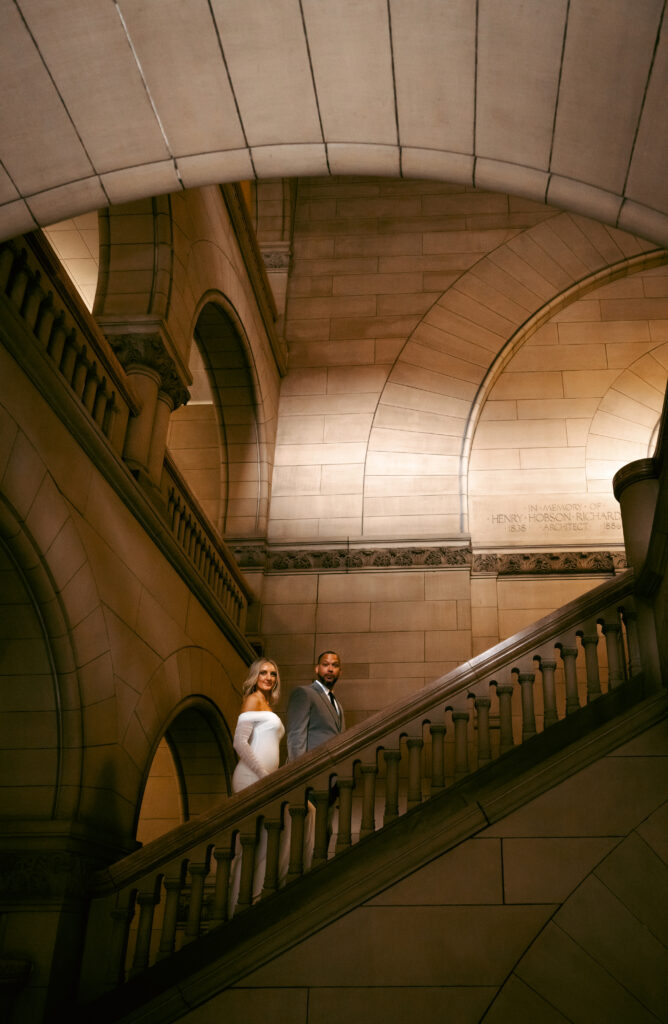
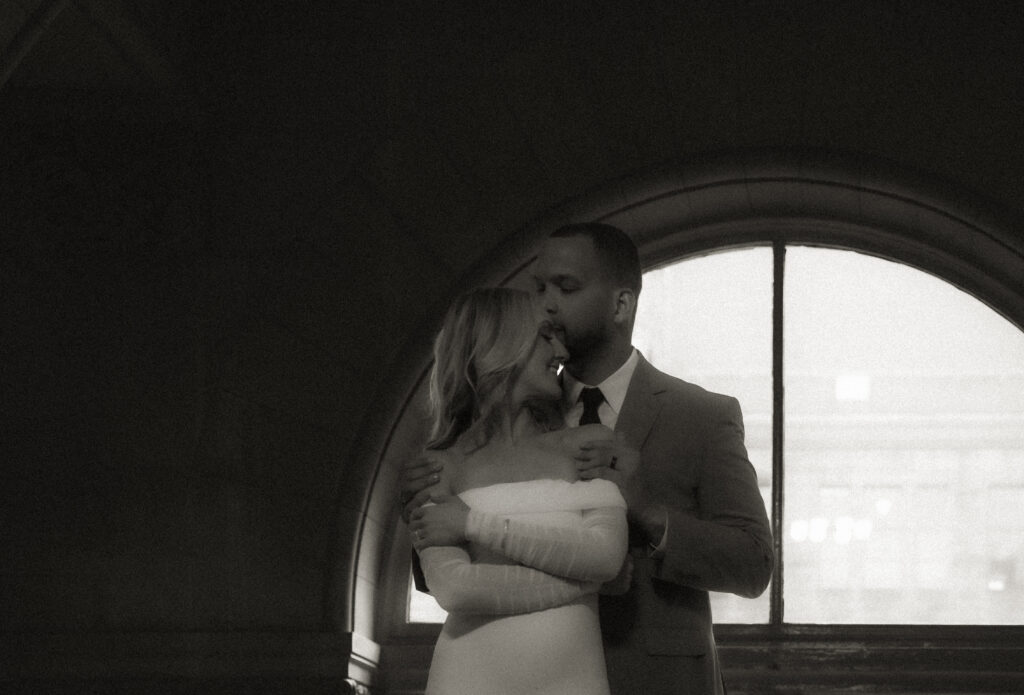
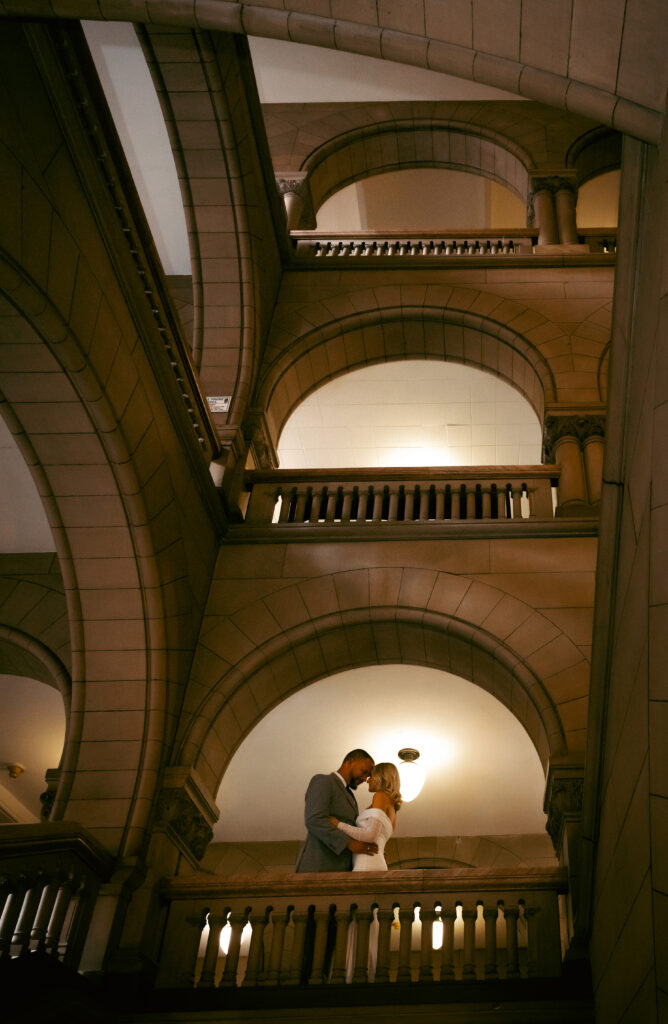
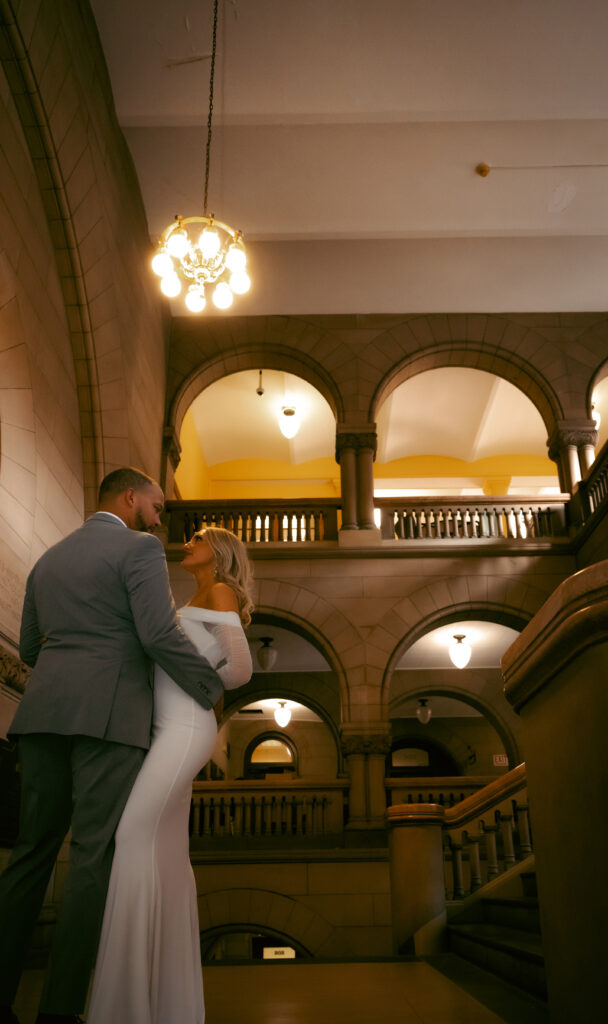
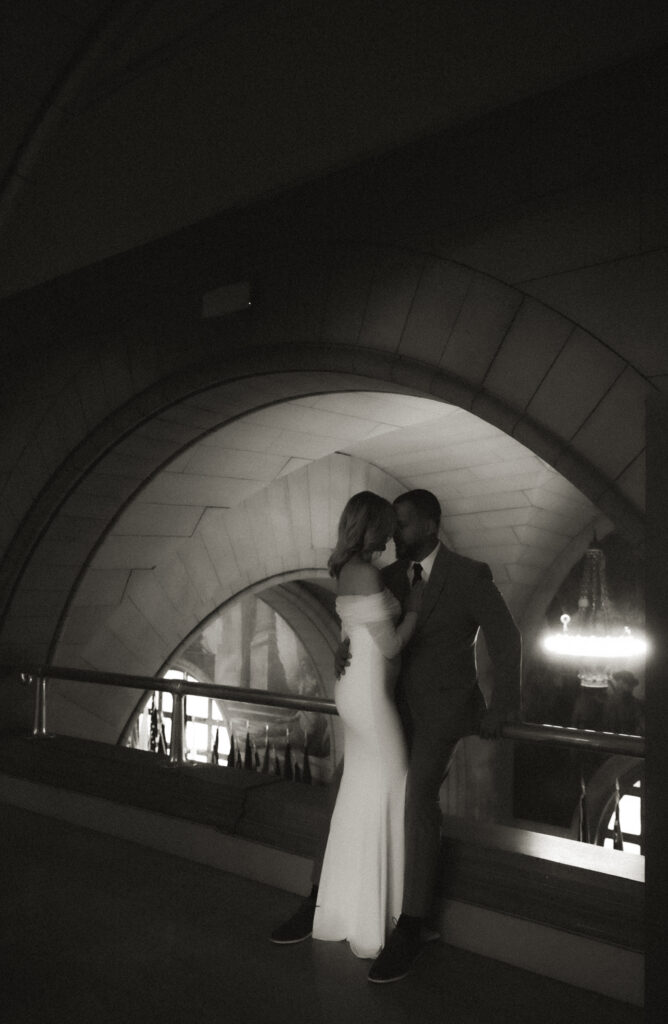
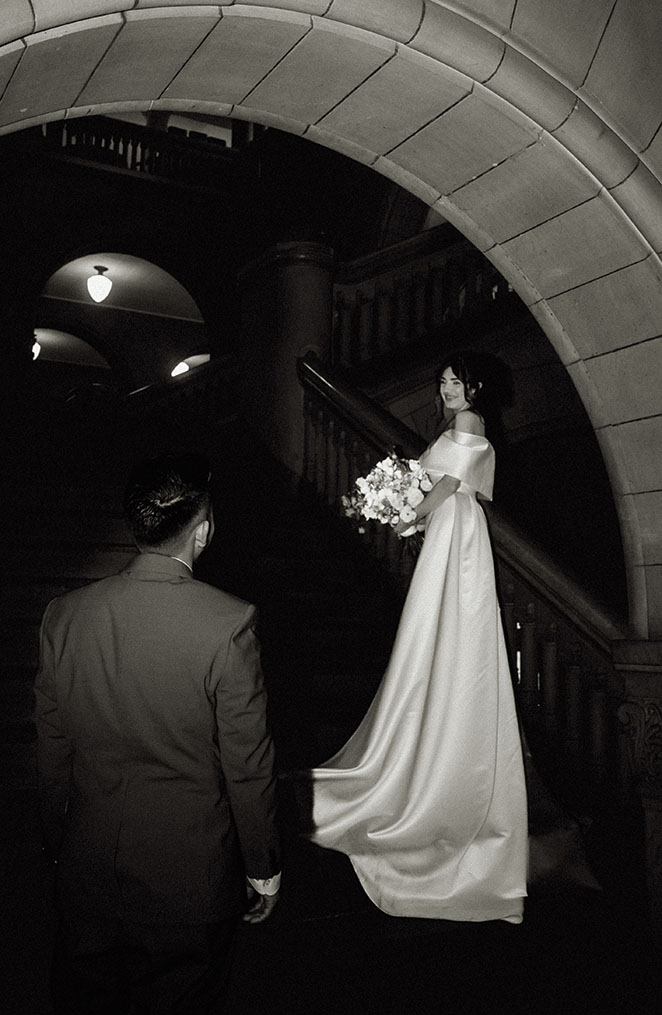
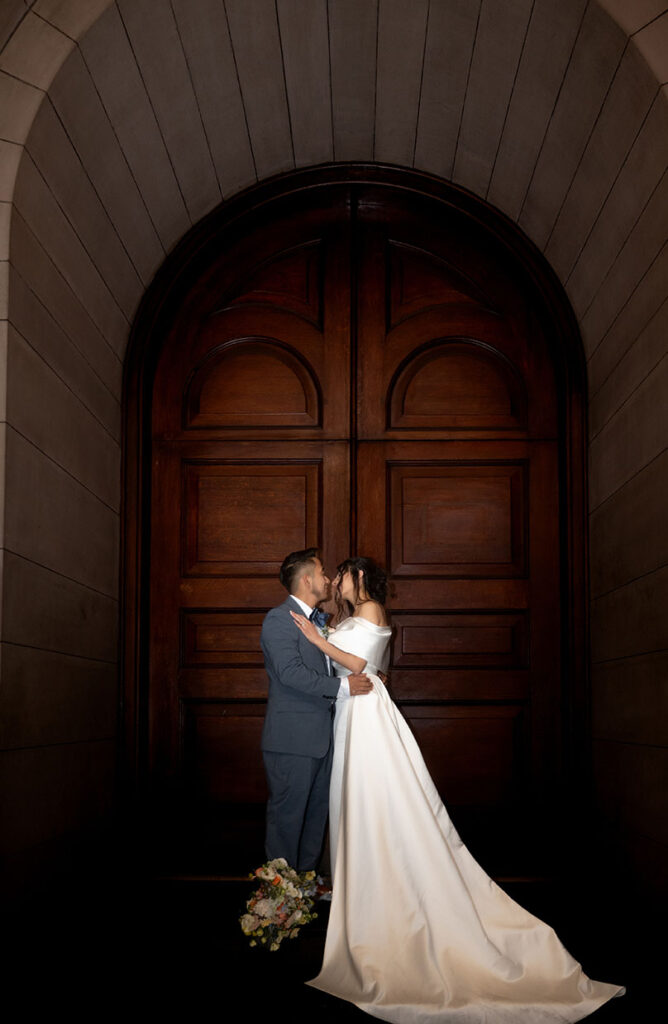
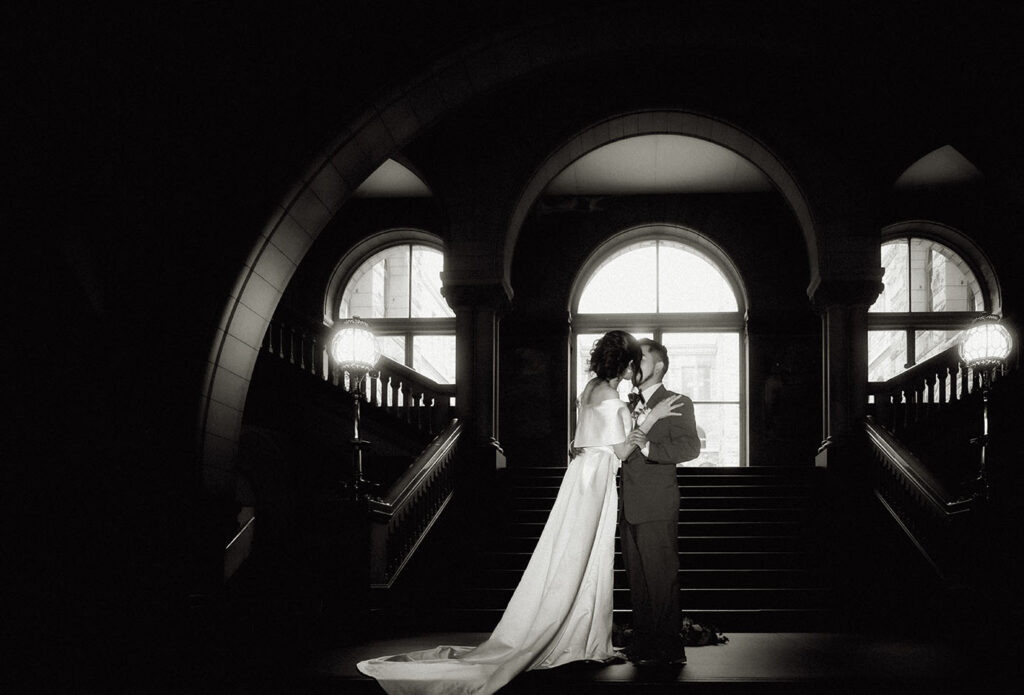
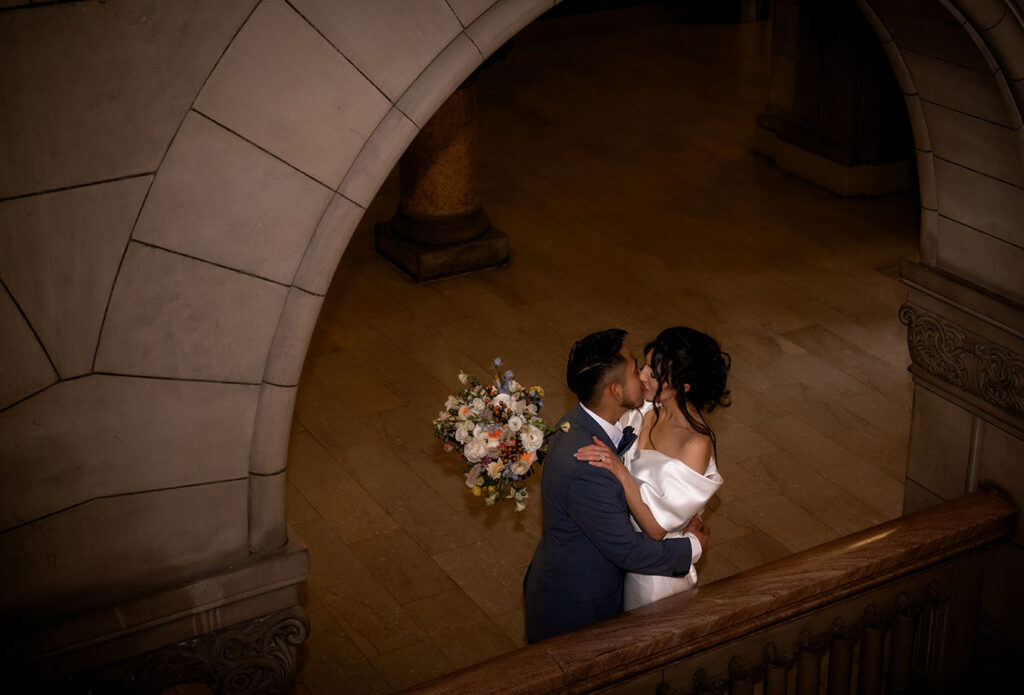
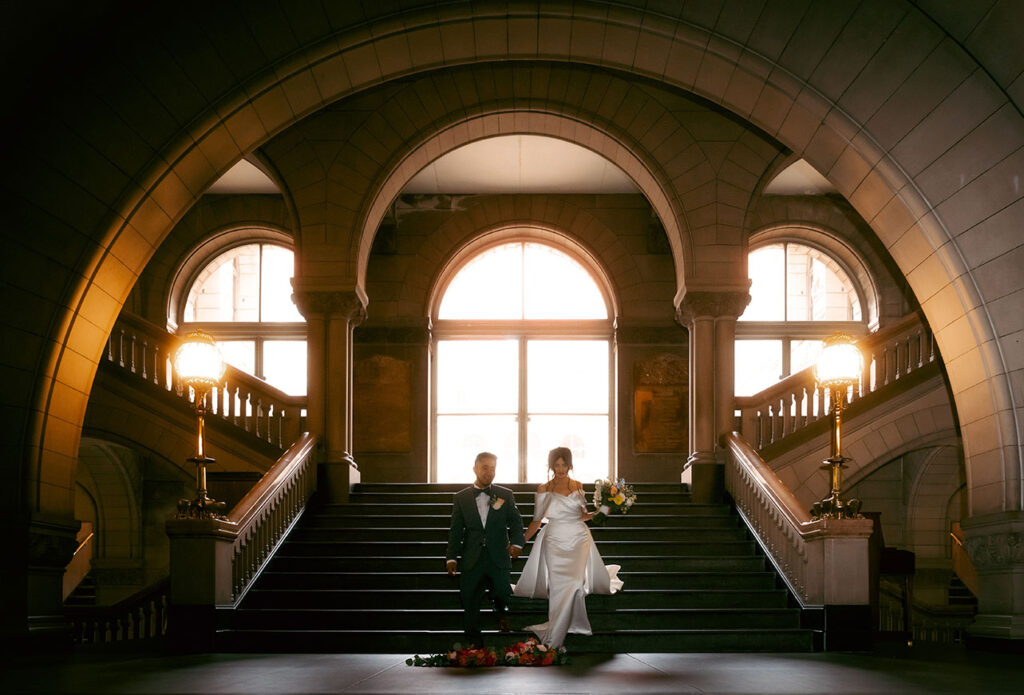
For couples in Pittsburgh, the Allegheny County Courthouse is one of the most beautiful and affordable wedding locations in the city.
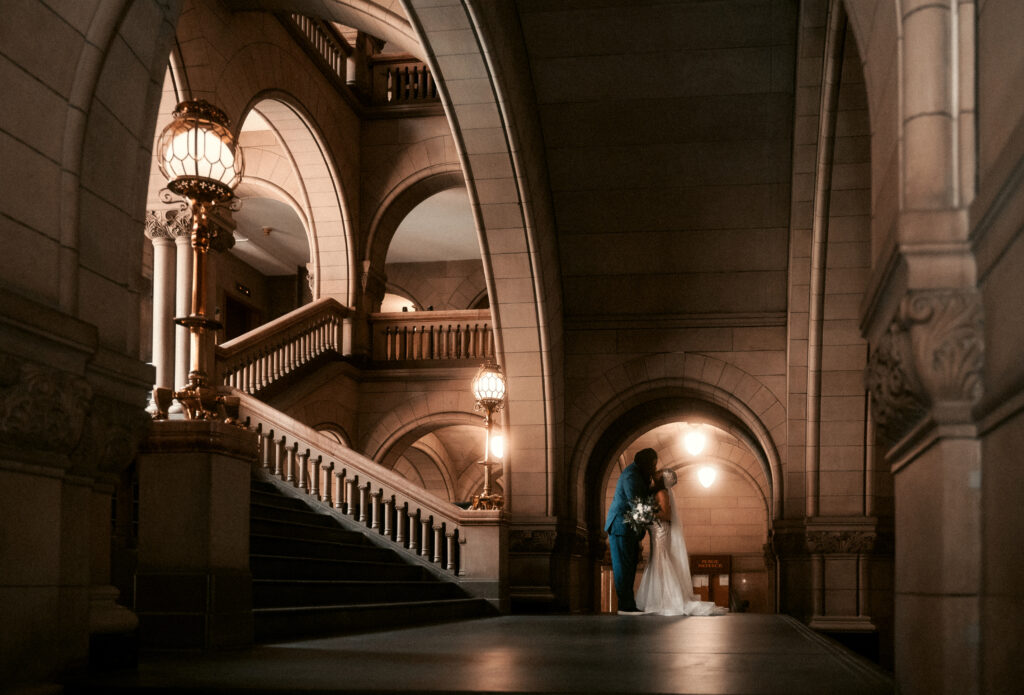
Designed by H. H. Richardson, the courthouse is considered one of the finest examples of Romanesque Revival architecture in the country.
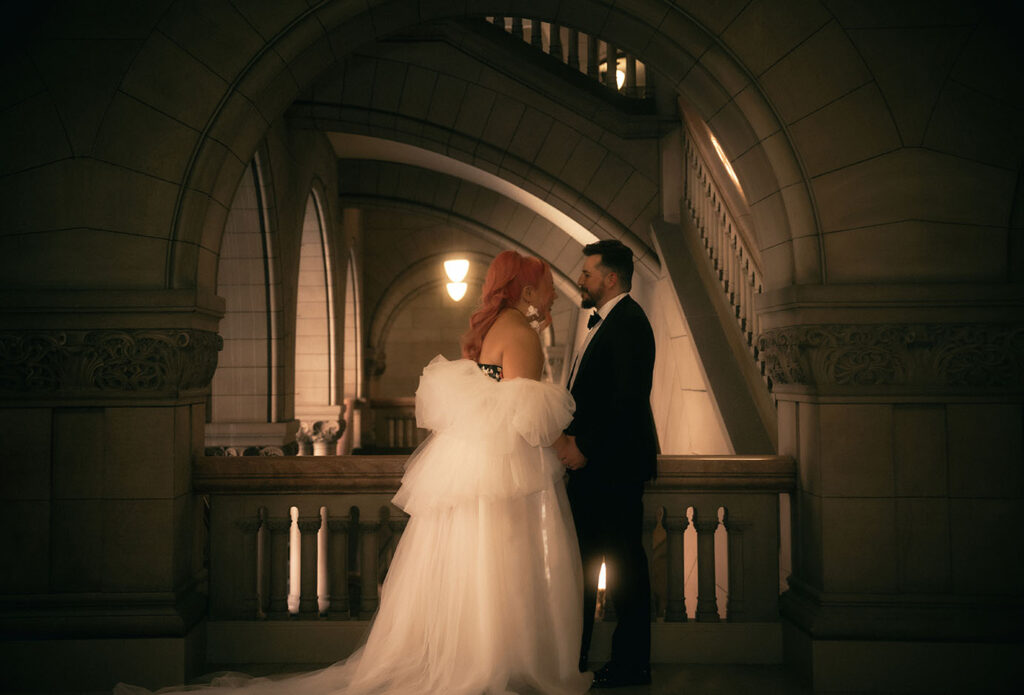
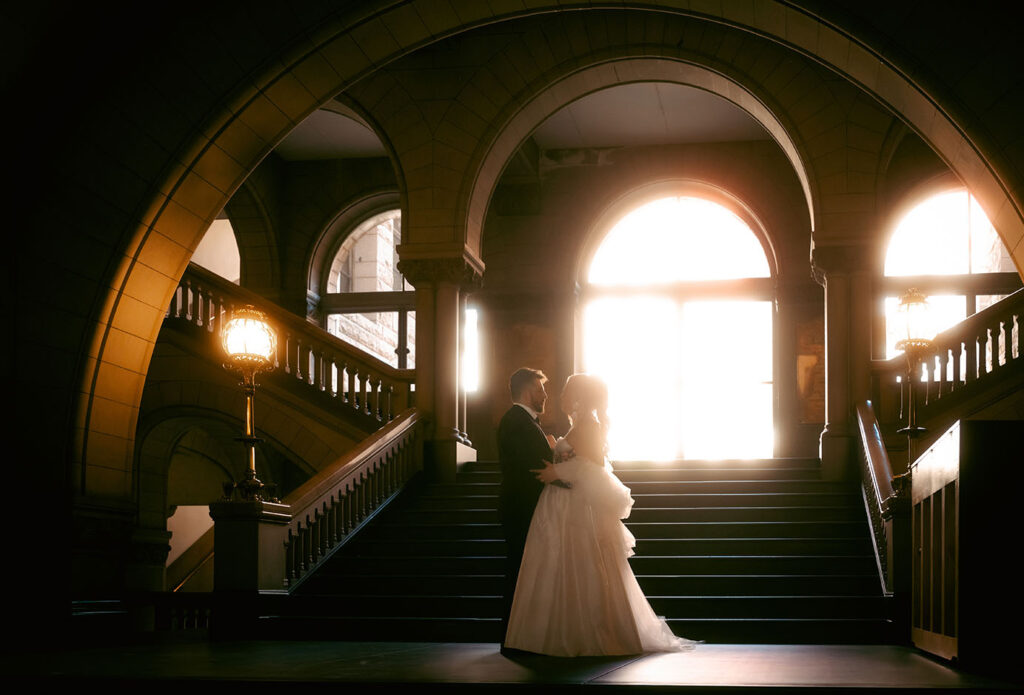
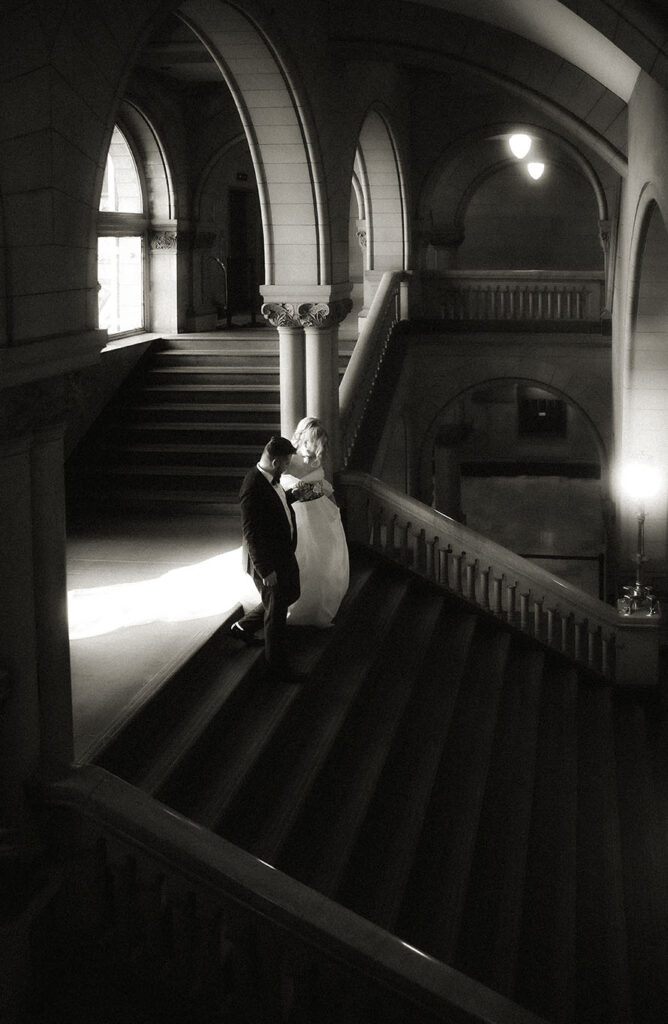
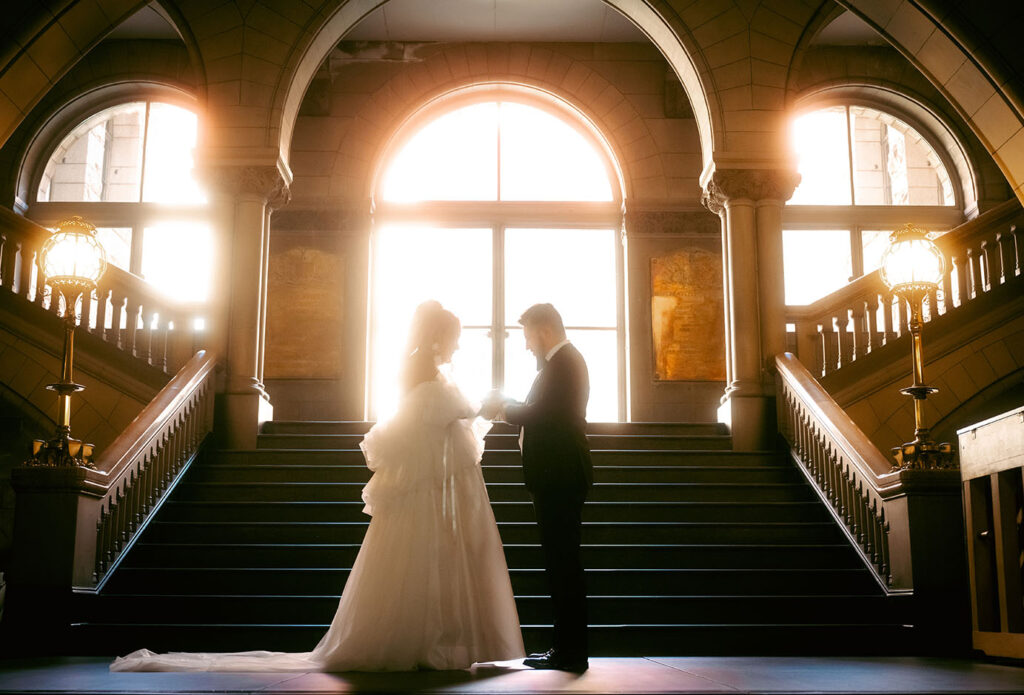
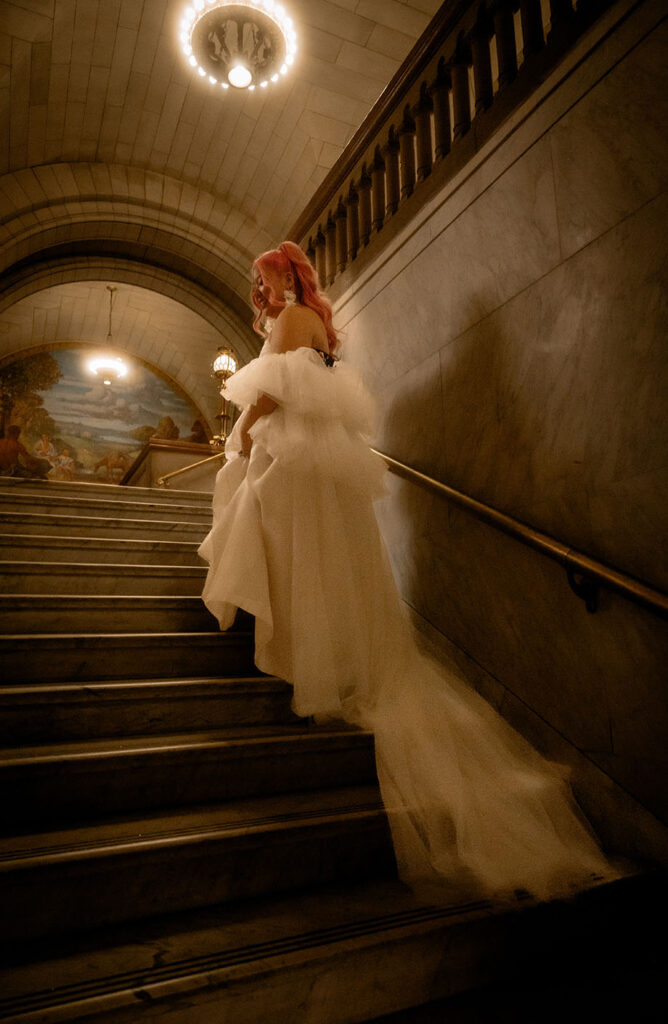
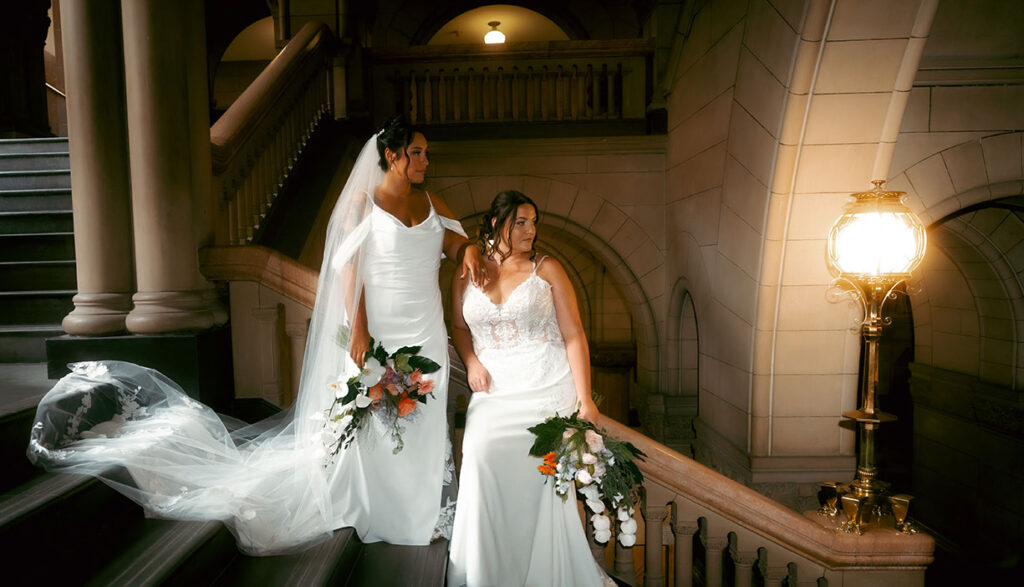
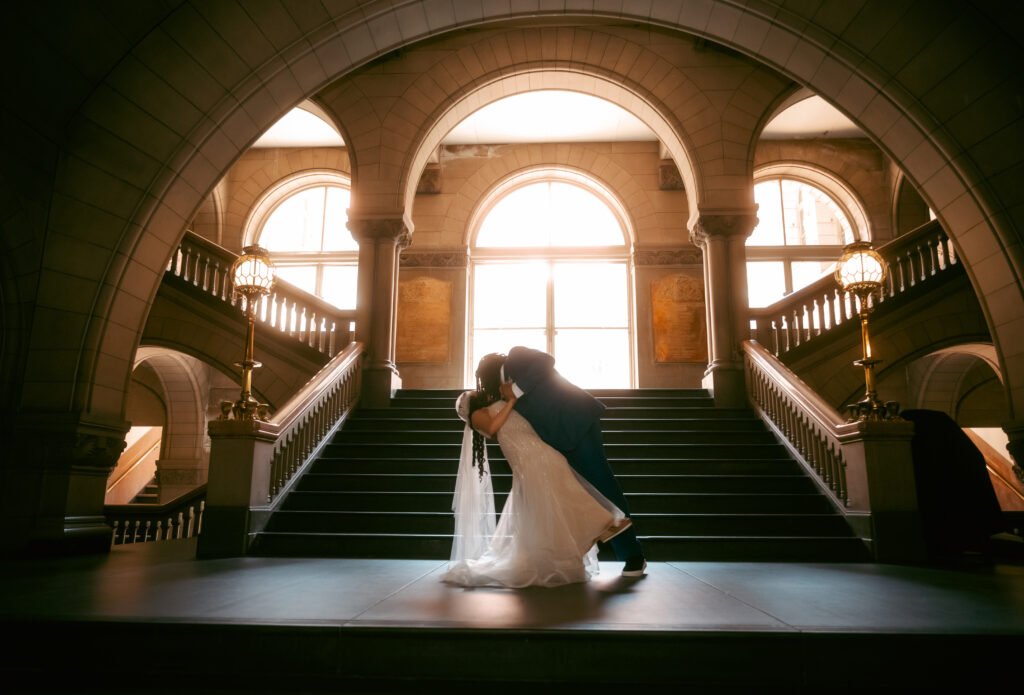
The grand staircase and historic architecture make it especially popular for intimate weddings and elopements.
Many couples choose to:
- Schedule a civil ceremony with a judge.
- Reserve the grand staircase for portraits or ceremonies.
- Celebrate with a small number of guests.
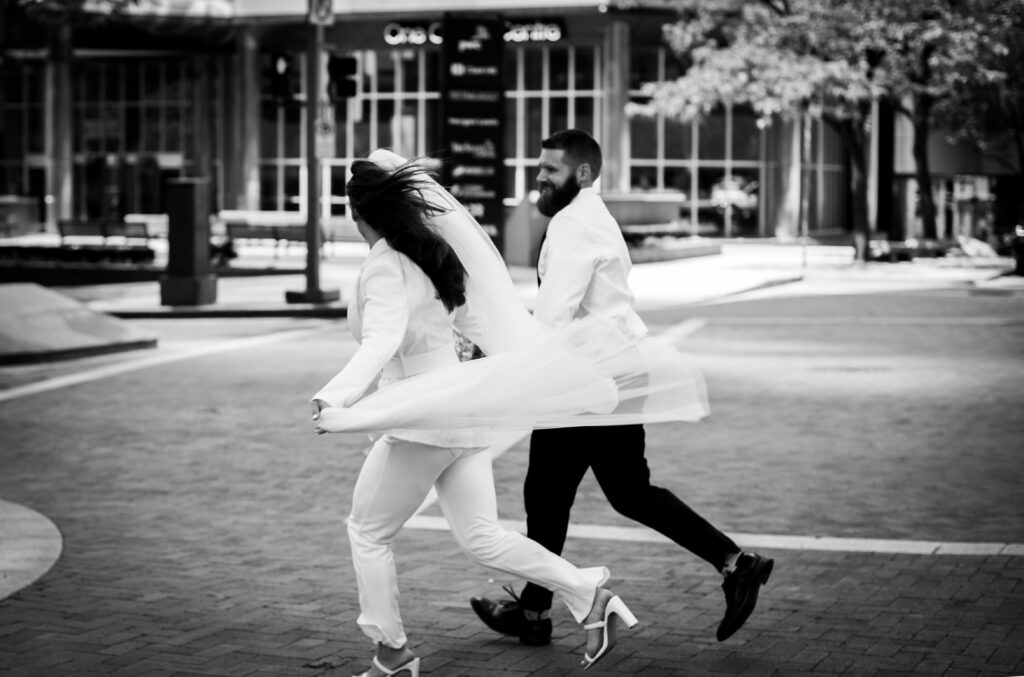
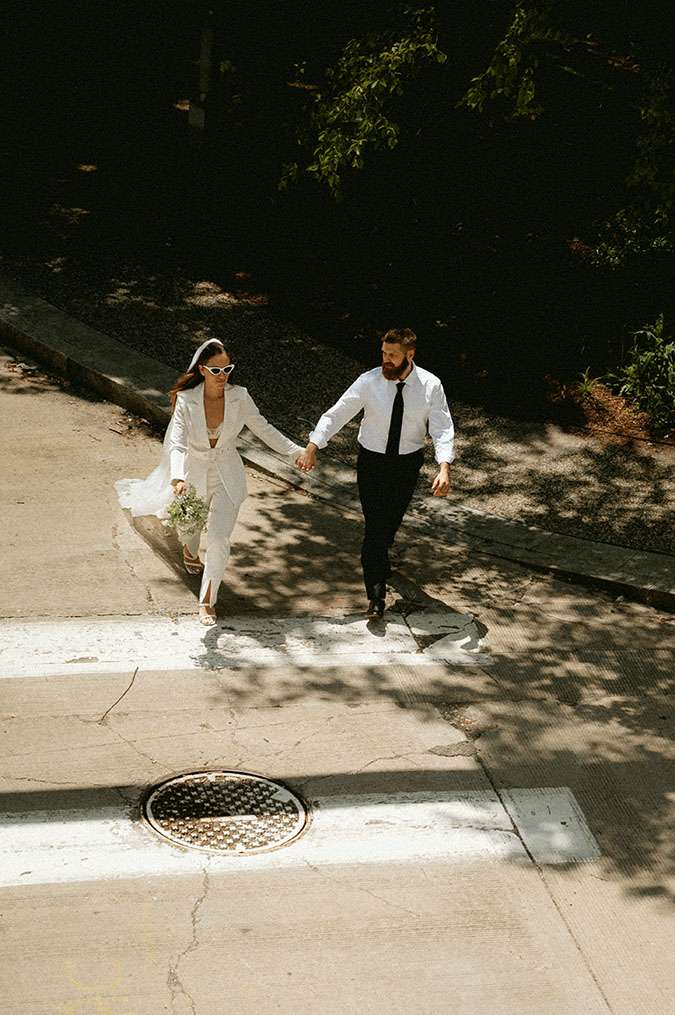
- Explore downtown Pittsburgh afterward for photographs.
The courthouse offers an elegant setting that feels timeless and uniquely Pittsburgh.
How to have your ceremony at the Allegheny County Courthouse for Free
Let me tell you how to reserve this venue for free for your wedding ceremony
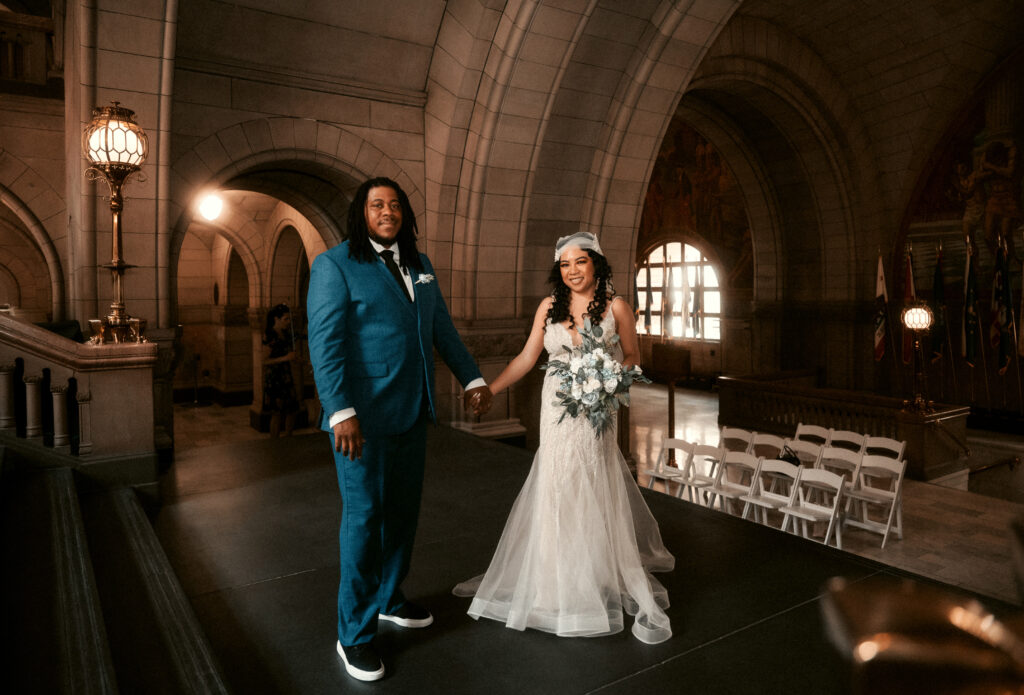
Once you have your appointment with the judge and you know the date you’re getting married, you will fill out this application to book the staircase for a two hour window, which is included included with the fees of the marriage application and license, which will come to $80.00
Once the Allegheny Venue coordinators get back to you and you’re good to go on your date, you will then file a permit and after that you will just let them know how many chairs you’d like to have in front of the staircase.
My beautiful bride, Val book a violinist to play music right before the ceremony, which just elevated it the elegance and sentiment of the wedding ceremony. You can check out her tik-tok video where she goes through her entire process here!
If you are looking to have a Pittsburgh courthouse wedding or elopement, I suggest you book your photographer for longer than the two hours, because you will want to take photos after the ceremony in the gorgeous Downtown Pittsburgh streets we have.
Why Pittsburgh Is Perfect for an Intimate Wedding
One of the advantages of getting married in Pittsburgh is the variety of locations available within walking distance.
After your ceremony, couples often explore:
- Downtown Pittsburgh
- The Allegheny County Courthouse
- Mellon Square
- The North Shore
- Point State Park
- The Cultural District
These locations create beautiful opportunities for portraits while allowing couples to fully enjoy their wedding day.
Frequently Asked Questions
How long does a Pennsylvania marriage license last?
A Pennsylvania marriage license remains valid for 60 days.
Is there a waiting period?
Yes. Pennsylvania requires a three-day waiting period.
Can we apply in one county and marry in another?
Yes. Marriage licenses issued in Pennsylvania can be used anywhere within the state.
Do we need witnesses?
Traditional licenses generally do not require witnesses. Self-uniting licenses require two witnesses.
Do we need an officiant?
Traditional licenses require an officiant. Self-uniting licenses do not.
Final Thoughts
Getting married in Pennsylvania is surprisingly simple, whether you’re planning a large celebration, an intimate courthouse wedding, or a self-uniting ceremony.
The process begins with your marriage license, but it quickly becomes something much more meaningful: the beginning of your life together.
If you’re planning an intimate wedding, courthouse ceremony, or elopement in Pittsburgh, I’d love to help document your day with honesty, artistry, and intention.

Leave a Comment